

Any serious effort to build a social media presence has to follow clear guidelines. Our experience has led us to define and follow rigorously 7 proven principles. These guiding principles are the heart of our strategy. They are what dictates our tactics, makes our planning easier and allows us to set an execution plan that maximizes impact. This is our "manifesto" for avoiding "haste" and the mistakes that follow from it.
Principle 1: You cannot favour one platform at the expense of the others
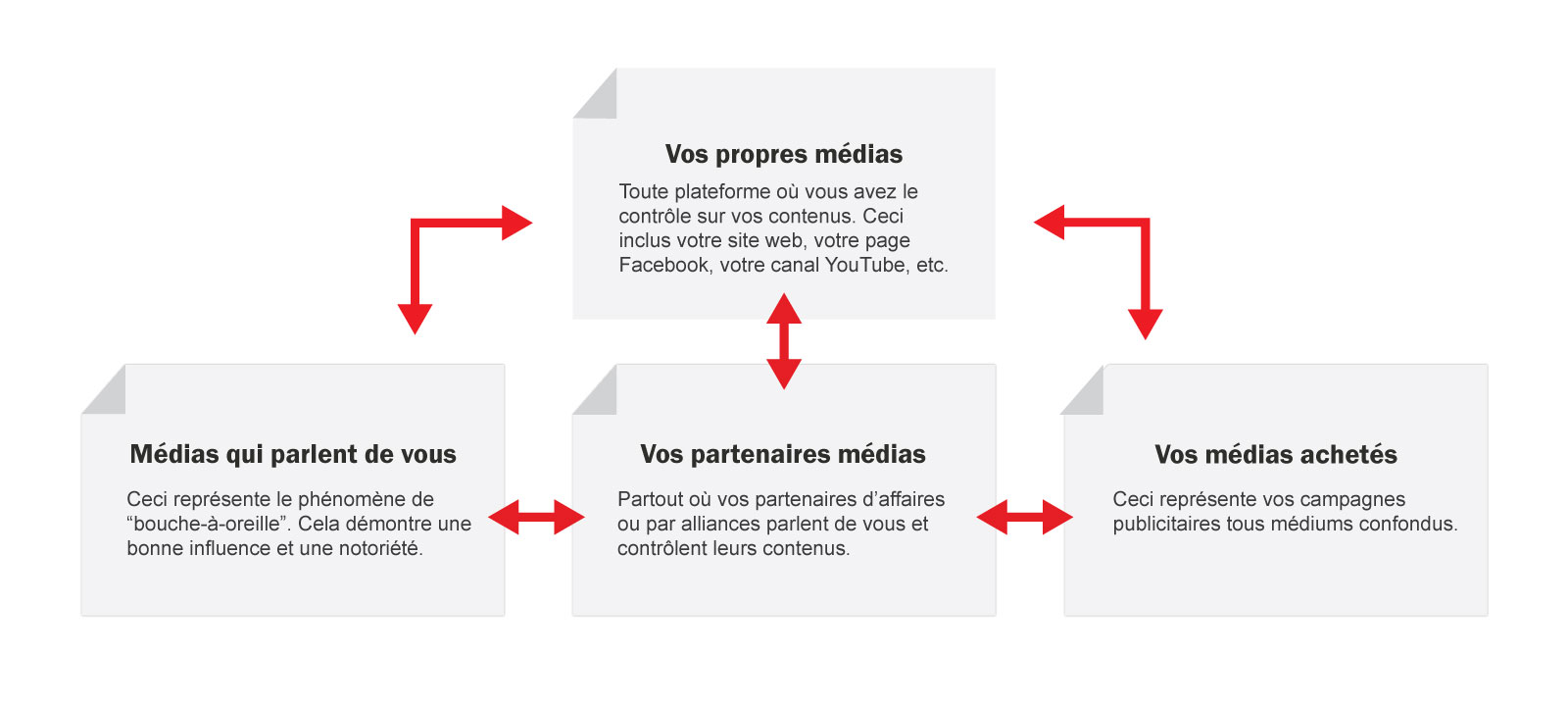
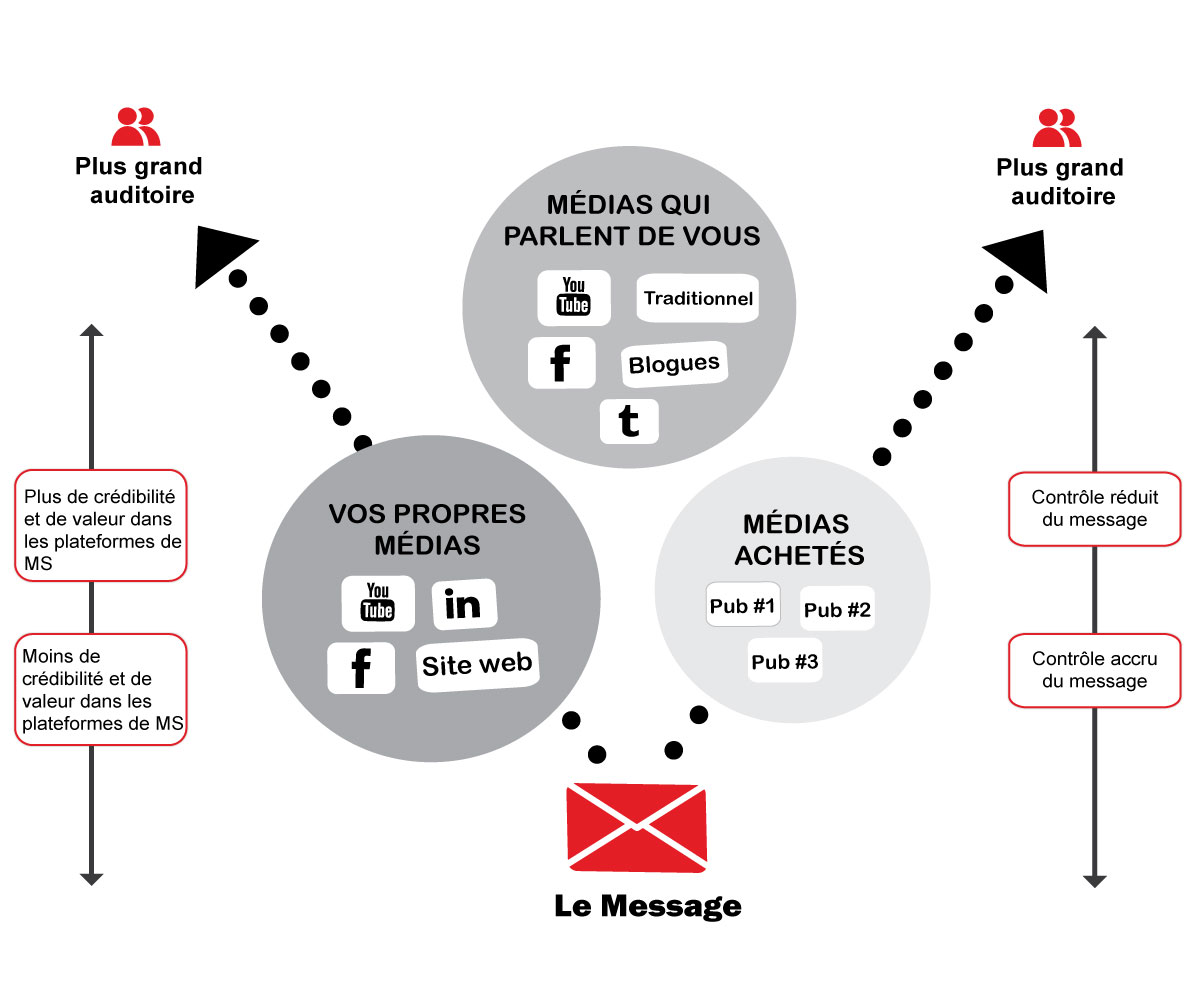
Social media covers a wide territory of applications, components and features, all of them interconnected directly or indirectly. One known mistake or misunderstanding is that using one platform is enough to have considerable impact. In our view, social media is comparable to an engine that contains several parts. For the engine to run, each part has to do its job. The strategy proposed has to account for each platform and hold a unified communication and editorial vision.
Here is a diagram that illustrates the interlocking links between the different types of media. A communication made using one medium has to be reinforced by the others.
Principle 2: One for all and all for one!
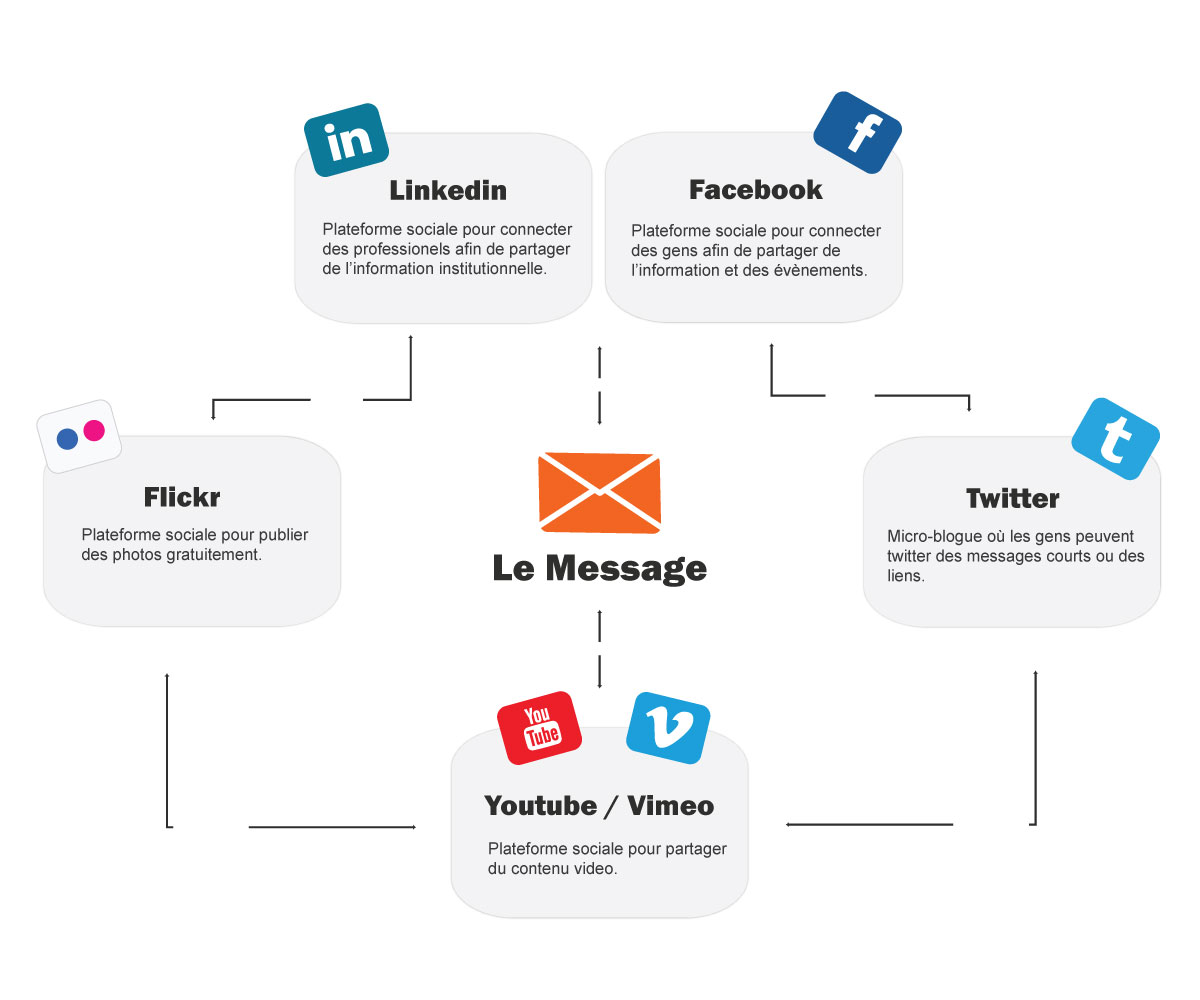
Actions taken on social platforms have to be consolidated and consistent. That means you need a strategy built around the message to communicate, the interaction you want and of course the potential impact on the target.
The following diagram illustrates the relationship between social media platforms. At the heart of that relationship is the content published. Users have different consumption habits depending on the platform; some prefer Twitter, others Facebook. Publishing the message properly is what guarantees us a larger audience.
Principle 3: Nothing works without the “conversations”
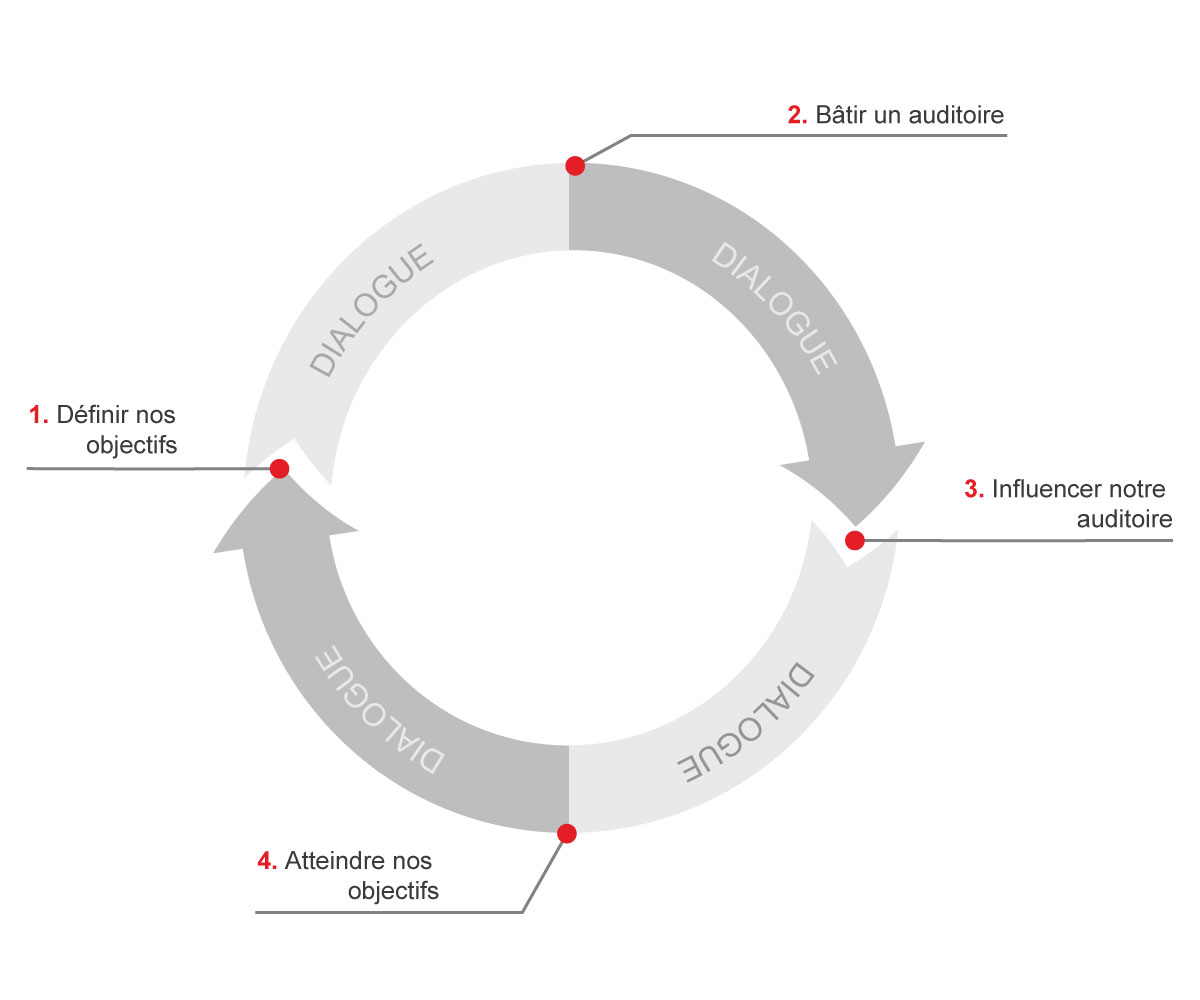
This is common knowledge, but our past experience leads us to observe that it is the hardest principle to put into practice. Keep in mind that when we refer to social media, we are talking about "dialogue" and "conversation". For example, you ask people for their opinion on a topic to encourage discussion to emerge. As in any discussion, people need new material to feed their exchanges, they need to interact with new people, and all of that leads them to keep a conversation going.
The following figure illustrates how a conversation develops. With a specific objective in mind, we use our social media platforms to start a conversation. We can, for example, use video or photos from an event to catch the attention of "people". That is the critical entry point for building an audience. After that, the conversation has to be enriched with extra content in order to hold interest, and finally you move to acquisition mode and send them an invitation.
Principle 4: what you say matters as much as how you say it
This is a decisive success factor that sets you apart from the conventional way of communicating. It is a rule to keep in mind every time you address your target. It is quite simple: use the same accessible language your target uses. You will show them that you understand what they want and that you are listening to what they expect.
Principle 5: Keep your ideas in logical order
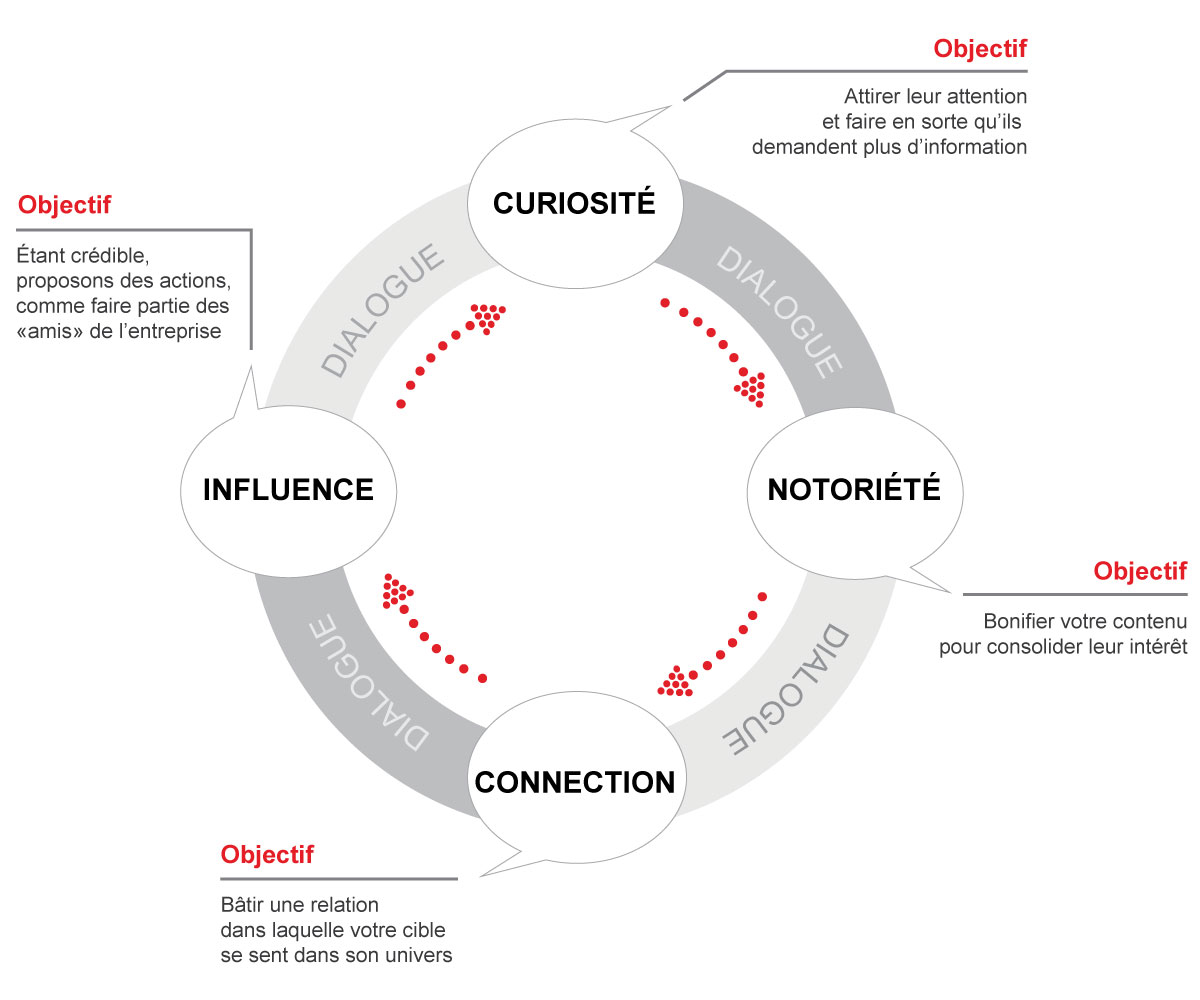
Every communication sent through social media has an audience and has to follow a logical sequence. You cannot jump from one step (message) to the next without coherent continuity; doing so risks watering the message down and simply losing it. For example, announcing a public event is a good way to stir curiosity, but not enough to establish visibility or create a connection.
The following graphic represents the life cycle of a message, from "curiosity" to "influence".
Principle 6: Be a good host
Mission accomplished, you have managed to build an audience and you are able to influence it. Well done, but it is not over! You cannot abandon them at this point. You should instead keep them interested and lead them to interact with and influence other people. What we are talking about here is the notion of "acquisition", where you have the chance to use the audience you have gained to gain new members.
Principle 7: It takes two hands to clap!
Traditional media (advertising, PR, web, mobile and so on) keep their weight and their influence. Every marketing and communication initiative has to bring its own social media into that effort. The better the information is spread, the more people will talk about us. The more people talk about us, the more we grow our audience, the more we grow our acquisitions, and so on.
Next: Social media for business: 3) Approach and action plan